

Should you choose an offshore project or a dedicated team?

Offshore development means working with a development team in another country. Choosing an arrangement involves more than headcount: do you need a defined result or ongoing development and adaptation?
This article compares two hypothetical needs: a request portal with defined outputs and an evolving product. Project-based and team-based are discussion labels; responsibilities, pricing and staffing conditions must be confirmed in the actual proposal.
1. How do project delivery and a retained team differ?
Project delivery centers on scope, outputs and acceptance criteria: for example, agreed submission, assignment and tracking flows. The partner organizes delivery while the client supplies information, resolves business questions and accepts results. It does not remove the client’s work.
A retained team provides agreed capacity while tasks follow product priorities, such as improvements driven by operating feedback. Identify who turns goals into clear work, sets priorities and reviews completion. Hiring people does not automatically provide product management.
Neither label automatically determines fixed-price or hourly billing. Projects can be phased, and retained teams still need outputs and quality responsibilities. Read the proposed scope, capacity and change arrangements rather than infer obligations from a package name.
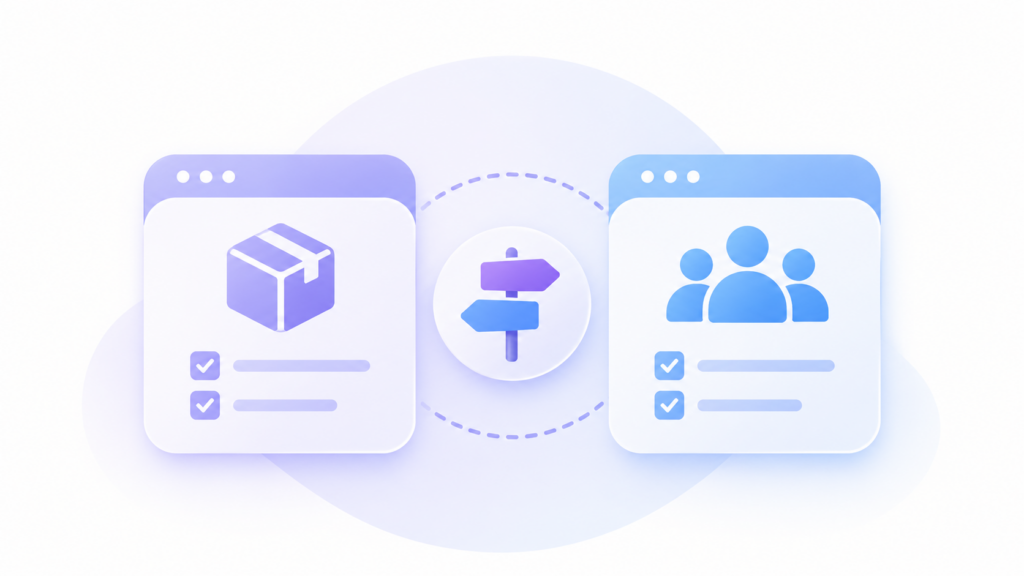
2. Choose around the work and your involvement
Defined outputs, clear approvers and understood dependencies support considering project delivery. If a critical portal integration remains uncertain, investigate it before treating the whole scope as settled. Premature certainty can produce repeated changes later.
An evolving product may benefit from continuing knowledge and feedback cycles. That depends on actual staffing, documentation and replacement handover. Ask about continuity and onboarding rather than assume a dedicated team never changes members.
Assess client availability too. Someone available only for month-end approval cannot resolve a continuous team’s daily decisions. Additional partner management may help, but clarify which decisions remain with the business and response expectations.
Either model needs clear business information and feedback ownership. How to collaborate effectively with an offshore team? helps organize communication and review so departments do not give conflicting priorities directly to individual engineers.
A defined release may still suit an ongoing team when a product needs long-term maintenance; an uncertain product may start with a bounded discovery project. Separate the immediate phase from the longer-term relationship and agree when to reassess.
For staff replacement, identify who receives knowledge and in-progress work, who checks the transfer and how delivery is affected. Ask under either model: a team commitment does not replace a handover process, and project delivery still needs knowledge continuity.
3. Clarify responsibilities before comparing costs
Compare both proposals against the same work: requirements, design, testing, release and support. A price including management and testing cannot be compared directly with development-only staffing.
Define completion evidence: stage deliverables for a project, or completed priorities, quality and deferred work for a retained team. Attendance or hours alone does not establish meaningful outcomes.
Include client effort for decisions, data preparation, testing and training. Agree what happens when a key owner is unavailable: wait, substitute or reprioritize. More engineers do not remove a client-side decision bottleneck.
4. Agree how to start, adapt and finish
When priorities change, identify who assesses impact and approves displaced work. How should you handle changing requirements? helps keep flexibility from becoming uncontrolled additions.
A discovery phase or small delivery can test collaboration before wider commitment. Give it a clear goal and review outcome rather than an indefinite familiarization period. Hybrid arrangements still need responsibility boundaries at the transition.
Ending a phase or changing teams should not lose product knowledge. How to hand over software to the next team covers records, access and recipient-led checks for a verifiable transition.
Discuss work clarity, product direction and available client owners with Fenix before fixing headcount or comparing per-person rates.