When is your AI pilot ready for everyday use?

A fluent AI demo does not show whether staff work better or spend longer checking. A useful pilot informs further investment, required changes and the scope authorized for use.
The hypothetical example is an assistant drafting replies from internal guidance for staff to review before sending. It cannot send messages or edit records. Results for that bounded task do not automatically apply to other departments or action-taking tools.
1. Agree the task and success conditions
Define inputs, outputs, users and the current process. Is the delay finding guidance, writing or waiting for approval? Without a clear objective, text-generation speed may be measured while the real bottleneck remains. Include only functions needed to test the question.
Business reviewers define correct, complete and unacceptable results. Check grounding, applicability and escalation when information is missing. Disclosure or consequentially wrong guidance differs from awkward wording; one satisfaction score should not hide those distinctions.
Resolve unverified sources or missing usage rights before assessing outputs. How to prepare your business data for AI helps identify eligible data rather than broaden access to improve a demonstration.
Record the decisions the trial will support: permitted users, required changes and stop conditions. Set criteria around business consequences, not an advertised universal percentage. The accountable owner must understand remaining risk before authorizing live use.
2. Evaluate quality and total effort
Include common, difficult, incomplete, out-of-scope and unauthorized cases. A correct answer from restricted content still fails. Reserve unseen evaluation data; favorable examples and recently tuned cases do not reveal boundaries.
Record configuration and sources for each run. Keep important failures as regression cases after model, source or instruction changes. Resolve reviewer disagreement before scoring, or score changes may reflect evaluation inconsistency rather than tool quality.
For document extraction, distinguish field errors and errors escaping review. How to check AI document extraction results explains why a high aggregate rate alone does not establish usable business data.
Measure preparation, generation, source checking, correction, approval waits and exceptions through to accepted output. Compare equivalent cases with the old process, not a few easy questions against all previous work.
Include tools, integrations, source upkeep and support, not just model usage. Separate one-time setup from recurring effort. If typing falls but checking rises, reassess task scope or automation rather than report generation speed alone.
Relate results to changed work, not merely working features. How can you tell if your software is delivering value? helps define monitoring and comparison before expanding investment.
3. Choose a limited rollout, a revised trial or a stop
A limited rollout when the tested scope has evidence
Authorize only tested users and tasks with monitoring and stop conditions. A company-wide release is not required. Keep staff-reviewed suggestions without granting autonomous sending, for example. State what is permitted and what remains untested.
Revise and retest when the gap is understood
Fix specific causes such as stale sources, retrieval problems or inadequate review tools, then reassess. Set a clear question and endpoint for the next trial rather than extending it for better-looking results. Retain rejected and failed cases to verify the fix.
Stop when benefit does not justify effort or risk
Stopping is reasonable when data use is unauthorized, important errors remain uncontrolled or correction erases the benefit. Record reasons and conditions for reconsideration. Sunk costs alone should not drive further investment.
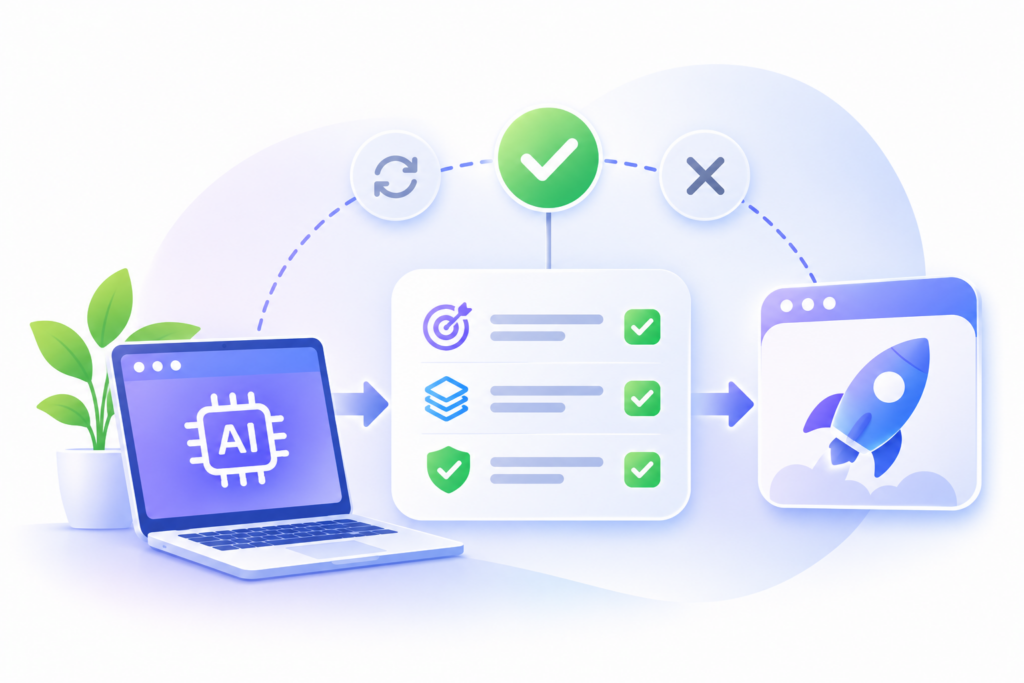
4. Assign ownership after launch
Users need sources, rejection options and escalation routes. An approval button is insufficient without time and information to detect errors. Test source inspection, correction, rejection and continuation without AI before expanding access.
Assign monitoring for important errors, feedback and source changes. Previous evidence may not cover a new model, configuration or audience. Retest affected scope and retain the ability to restrict or stop use when limits are exceeded, beyond uptime monitoring.
Updates, retesting and incident handling need an agreed support scope. What does software maintenance actually cover? helps divide client and supplier work beyond the demonstration.
Bring the target task, current process and unacceptable failures to Fenix. These support an investment-focused trial rather than simply showing that AI can generate content.